
If you could have any “ability,” which would it be?
When discussing laboratory furniture, flexibility, adaptability, mobility, and reconfigurability often dominate the conversation. For good reason. Modern laboratories are evolving faster than ever, and many facilities need furniture systems that can evolve alongside them.
But is more adaptability always the right answer?
It has been said that the single most important “ability” (more so than mobility, adjustability, flexibility, or adaptability) is availability. While I first encountered this saying in the context of family, I believe it also applies to laboratories. If a bench is not available when and where it is needed, none of the other abilities really matter to the user with an immediate need.
That said, this is not an argument against adaptable laboratory furniture. In fact, many modern research environments benefit tremendously from mobile benches, height-adjustable workstations, modular service systems, and reconfigurable furniture. The challenge for lab planners is not deciding whether adaptability is good or bad. The challenge is determining how much adaptability is appropriate for a particular laboratory.
After all, every project involves trade-offs.
Clients have finite budgets (please prove me wrong!). At the same time, laboratory owners, architects, and planners must balance numerous competing priorities including functionality, future growth, safety, equipment requirements, sustainability goals, and budget constraints. Determining where flexibility delivers genuine value is one of the more important decisions in the planning process.
Adaptability, reconfigurability, and flexibility can provide tremendous benefits when they align with a laboratory’s future needs. However, higher levels of these capabilities often come with additional cost and complexity. As flexibility increases, it is worth asking whether those features will ultimately be used often enough to justify the investment.
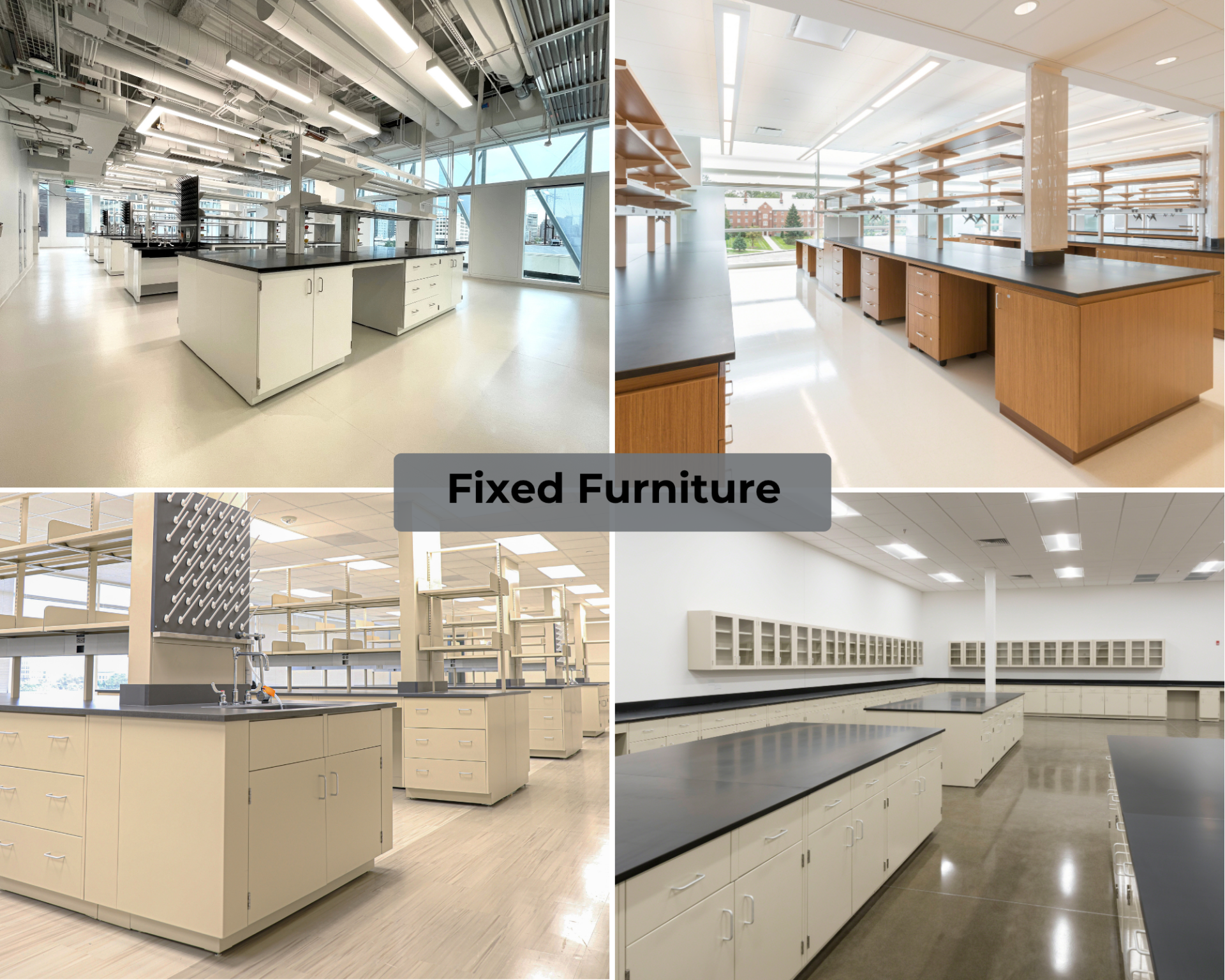
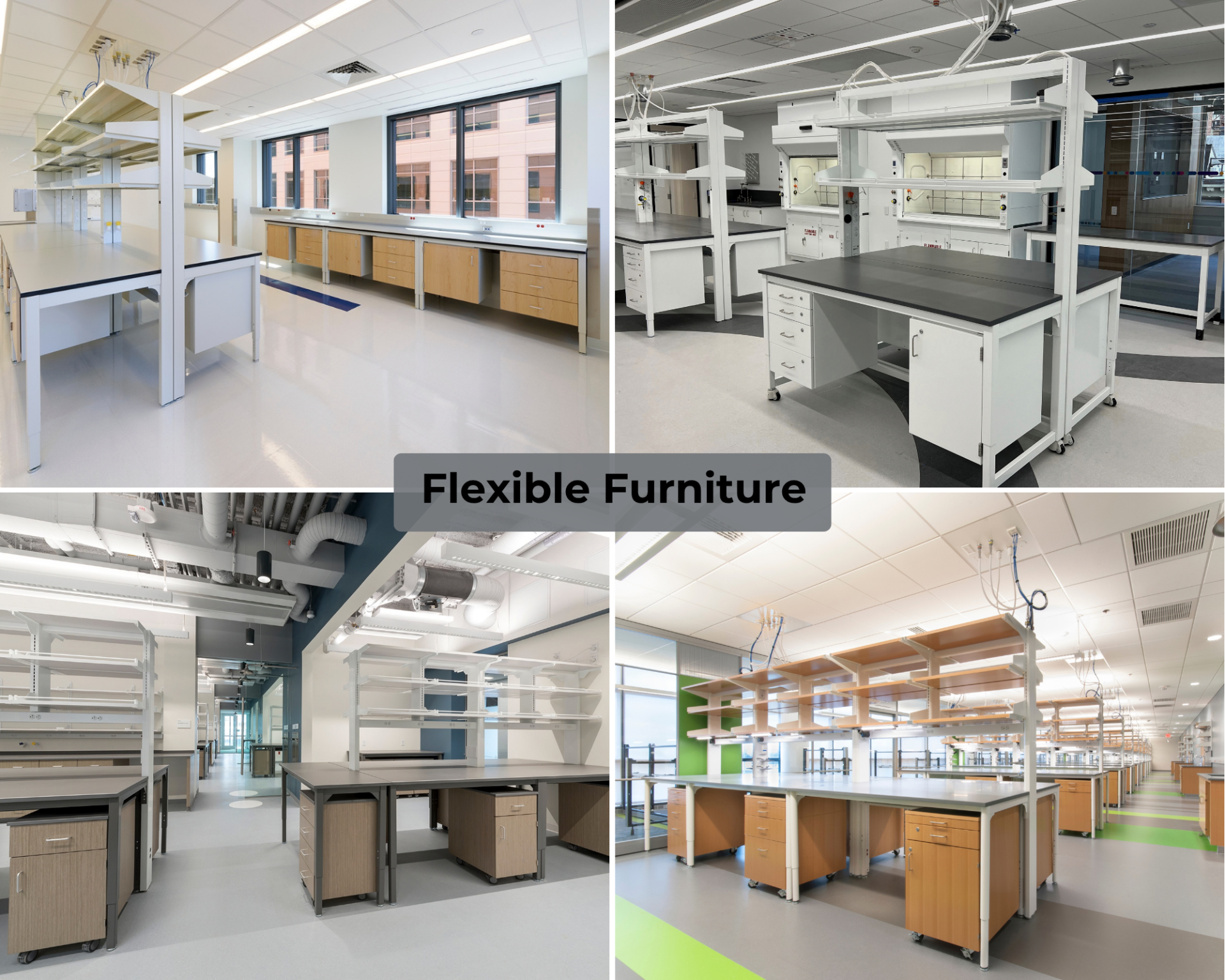
Not Every Laboratory Has the Same Future
There are certain lab types that may require relatively little flexibility, mobility, or adaptability over their lifespan.
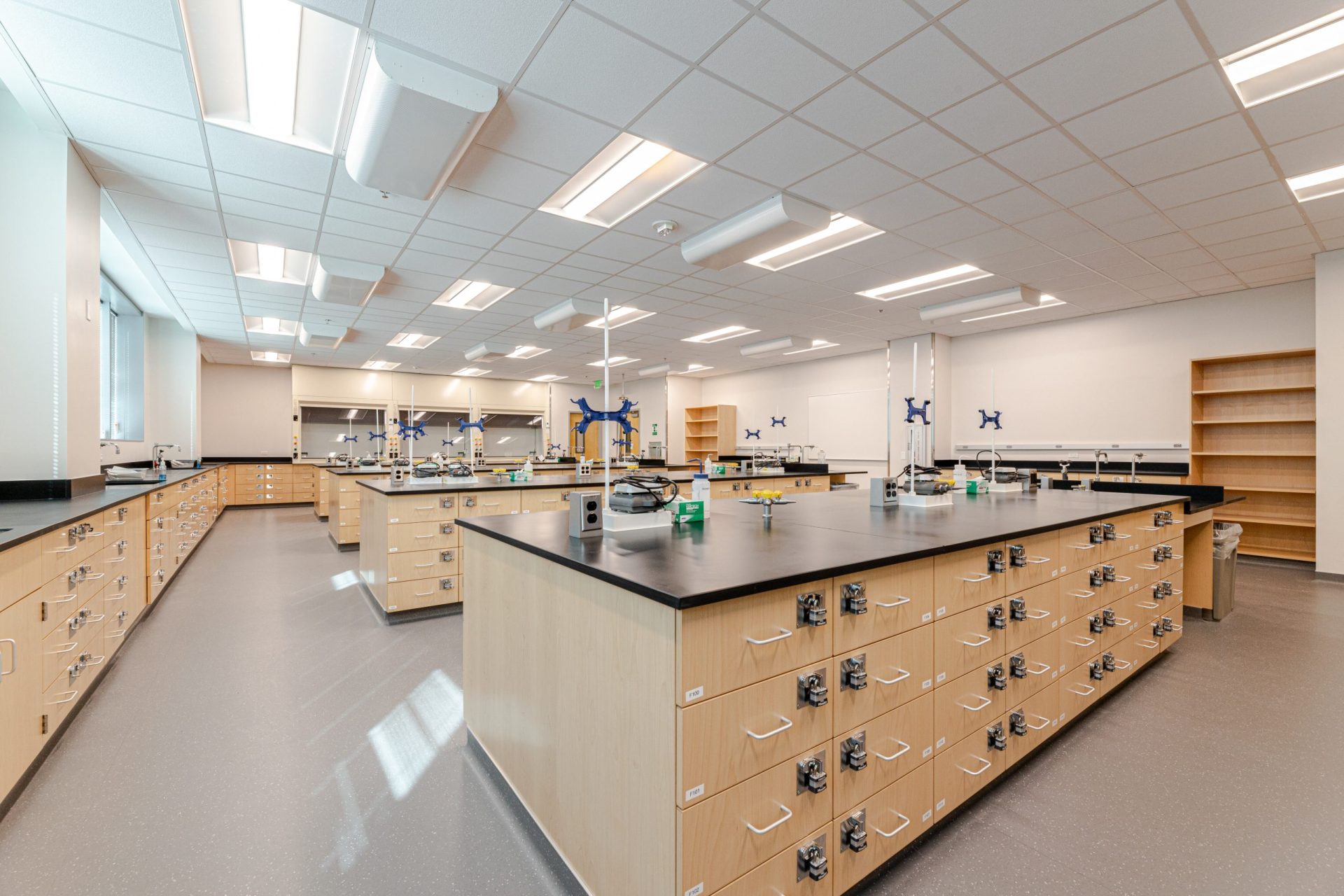
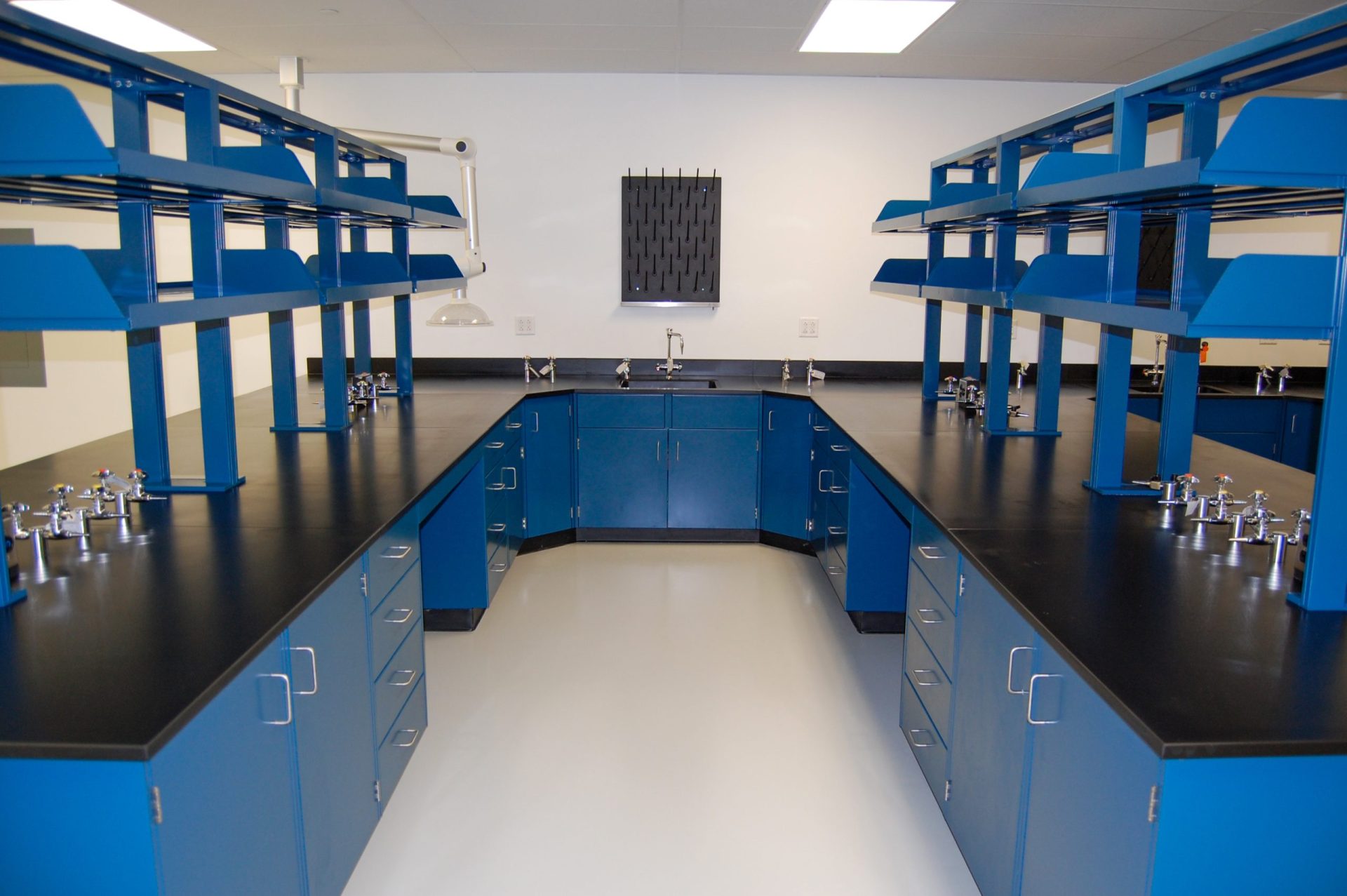
A prime example is an undergraduate chemistry teaching laboratory. These spaces typically maintain similar layouts, utility requirements, and instructional functions for decades. It is rare to see a teaching lab with a dozen fume hoods converted into a research environment requiring only a few hoods. In these situations, it is often reasonable to prioritize storage capacity, structural performance, vibration control, and overall value rather than investing heavily in future reconfiguration capabilities that may never be utilized.
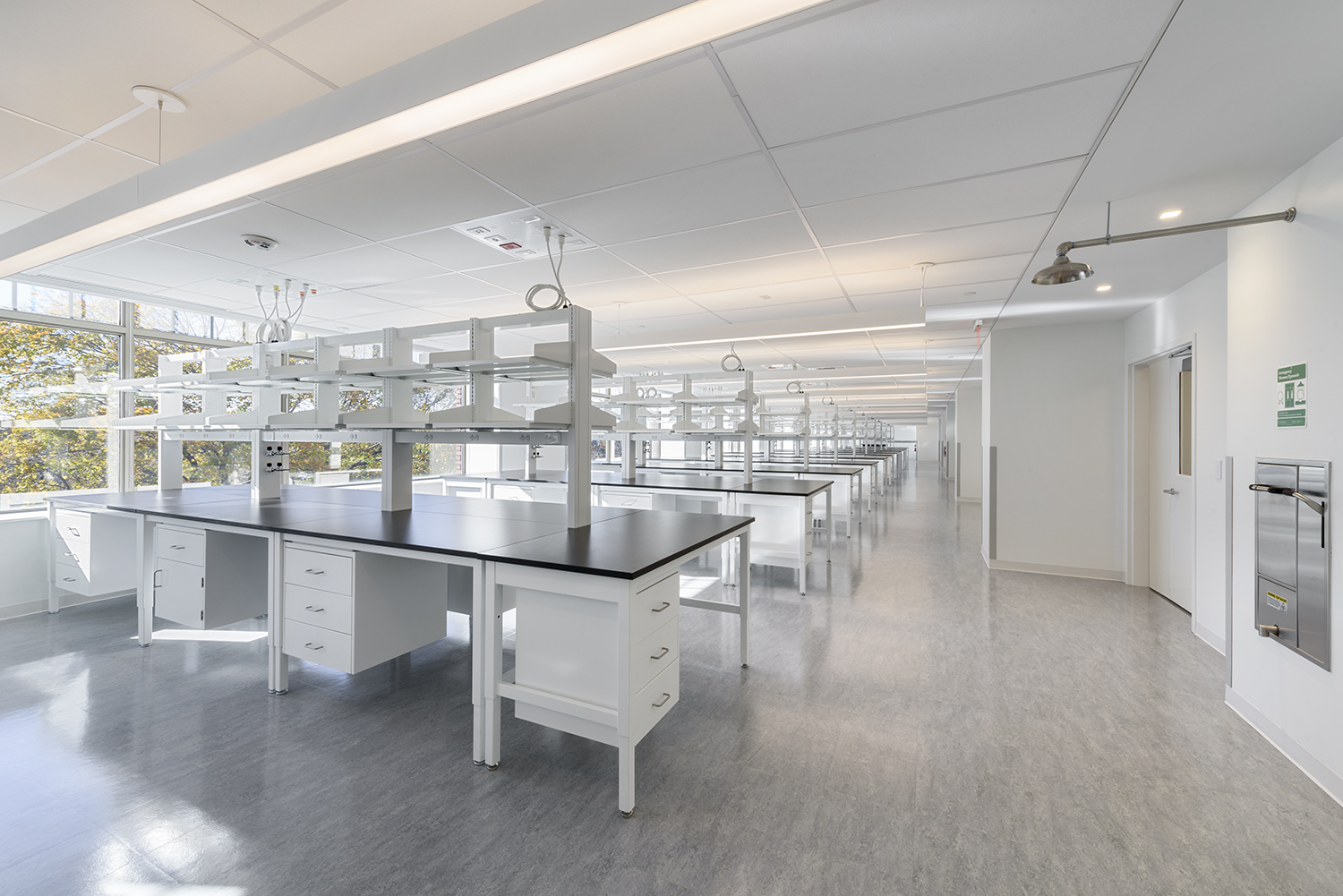
Conversely, there are laboratory environments where flexibility, mobility, and adaptability are almost guaranteed to be valuable.
Speculative laboratories (“spec labs”) are an excellent example. These facilities are frequently designed and constructed before a tenant has been identified, requiring furniture systems capable of accommodating a range of future users and applications. Similarly, many research laboratories expect program changes, equipment turnover, and evolving workflows throughout their lifespan. In these environments, adaptable furniture may help reduce future renovation costs and operational disruptions. Neither approach is inherently right or wrong. The appropriate solution depends on the anticipated use of the space.
Flexibility Exists on a Spectrum
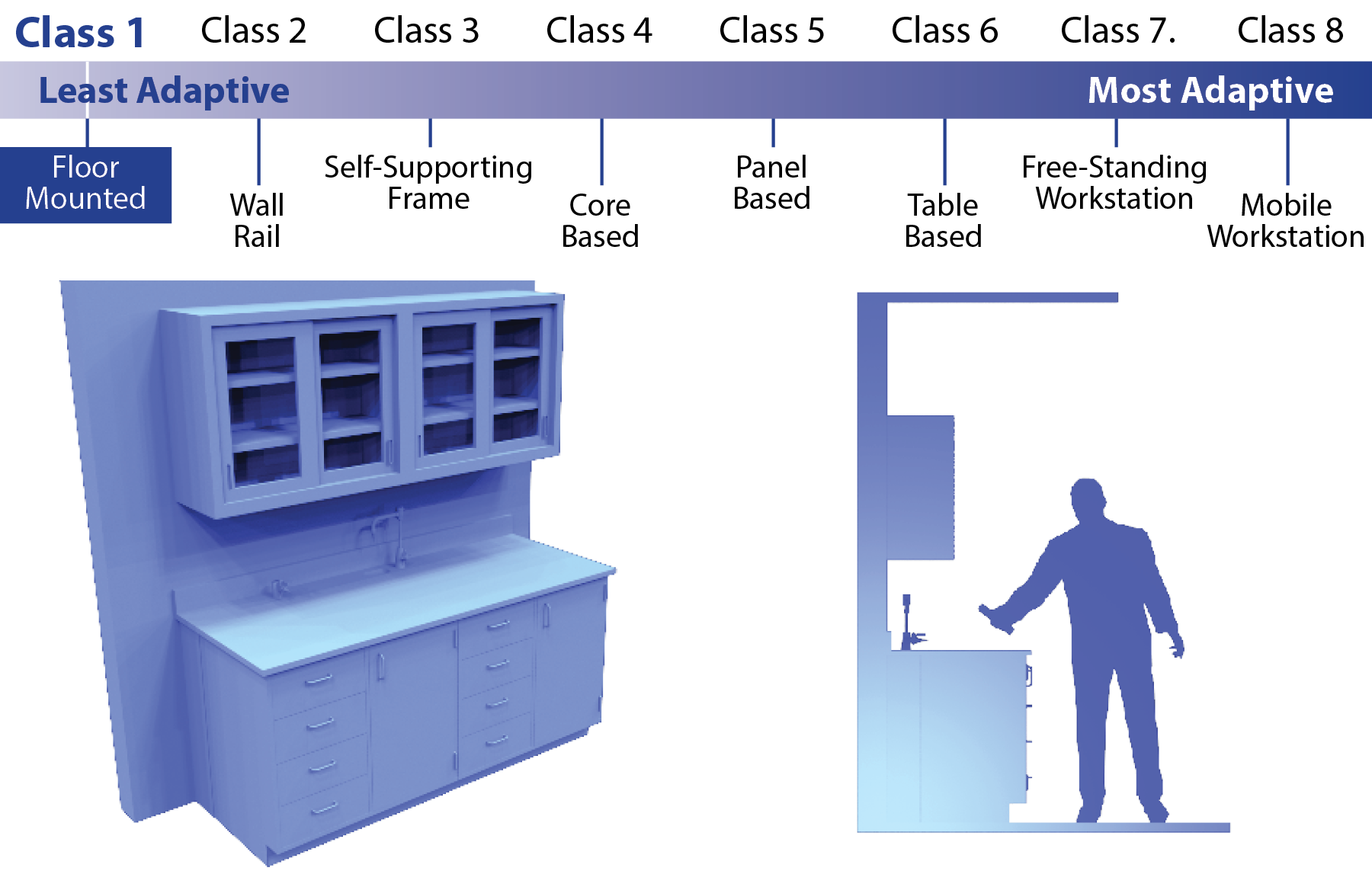
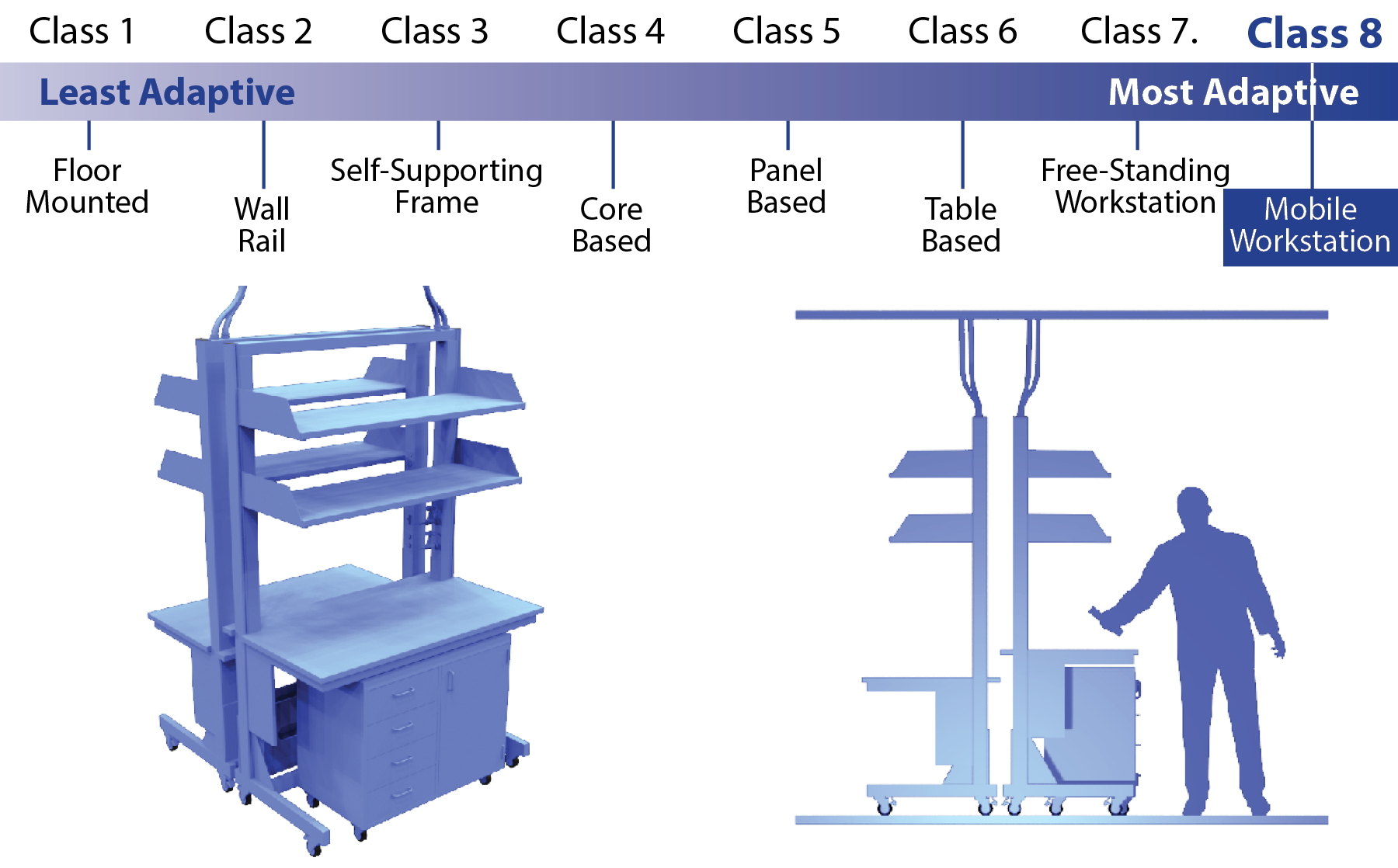
Casework and laboratory furniture are often discussed as though they are either flexible or fixed. In reality, flexibility exists on a spectrum. This is best explained by the Scientific Equipment & Furniture Association (SEFA) 10 standard titled Adaptable Laboratory Furniture Systems (see graphic below).
Most manufacturers offer solutions ranging from fixed casework to mobile benches, modular workstations, height-adjustable tables, movable equipment supports, and highly reconfigurable service systems. Each level of adaptability offers different advantages and comes with different costs.
As a general rule, greater flexibility often requires greater investment. At some point along that spectrum, a client may be paying for capabilities that are unlikely to ever be used. Determining where that point exists requires understanding the laboratory’s mission, anticipated evolution, and operational requirements.
This is where the experience of lab planners becomes invaluable.
The Cost of Unused Flexibility
One aspect of adaptability that is sometimes overlooked is what happens when flexibility requires removable or interchangeable components.
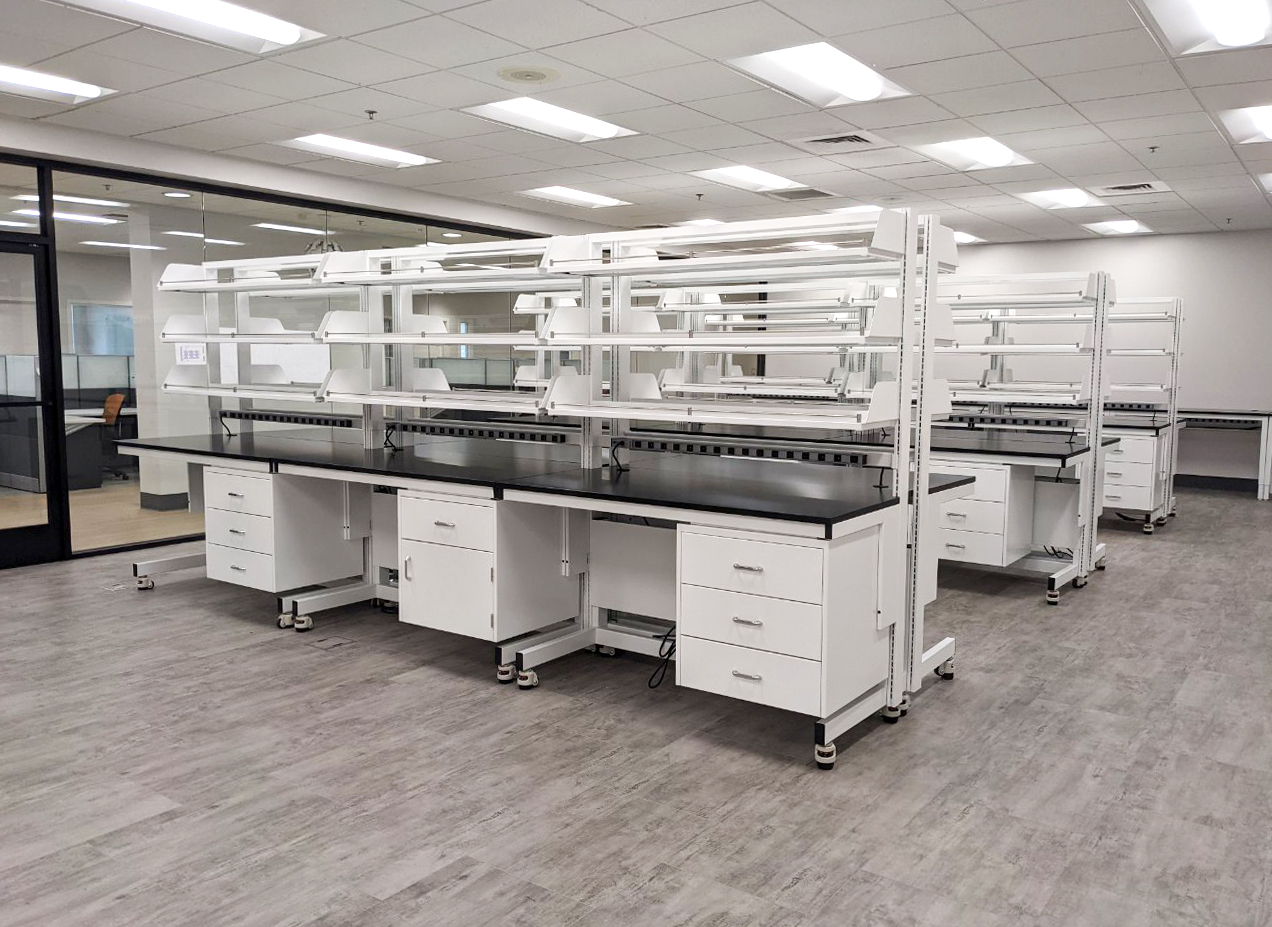
Highly adaptable systems may include movable service drops, removable shelving, modular work surfaces, or accessories intended to support future reconfiguration. But if those components are removed, where are they stored until they are needed again?
I’ve heard this question raised many times by experienced lab planners:
“Where will the client store that removable service carrier, that shelving unit, or that table component when it isn’t being used?”
If storage space is not readily available, those components may remain in place indefinitely. In those situations, the flexibility that was purchased may never actually be realized. On the other hand, if dedicated storage space is required, owners should consider whether that space represents the most effective use of the building budget.
Again, this does not mean flexibility lacks value. It simply means flexibility, like any design feature, should provide measurable value relative to its cost.
The Cost of Too Little Flexibility
Of course, the opposite mistake can be just as costly.
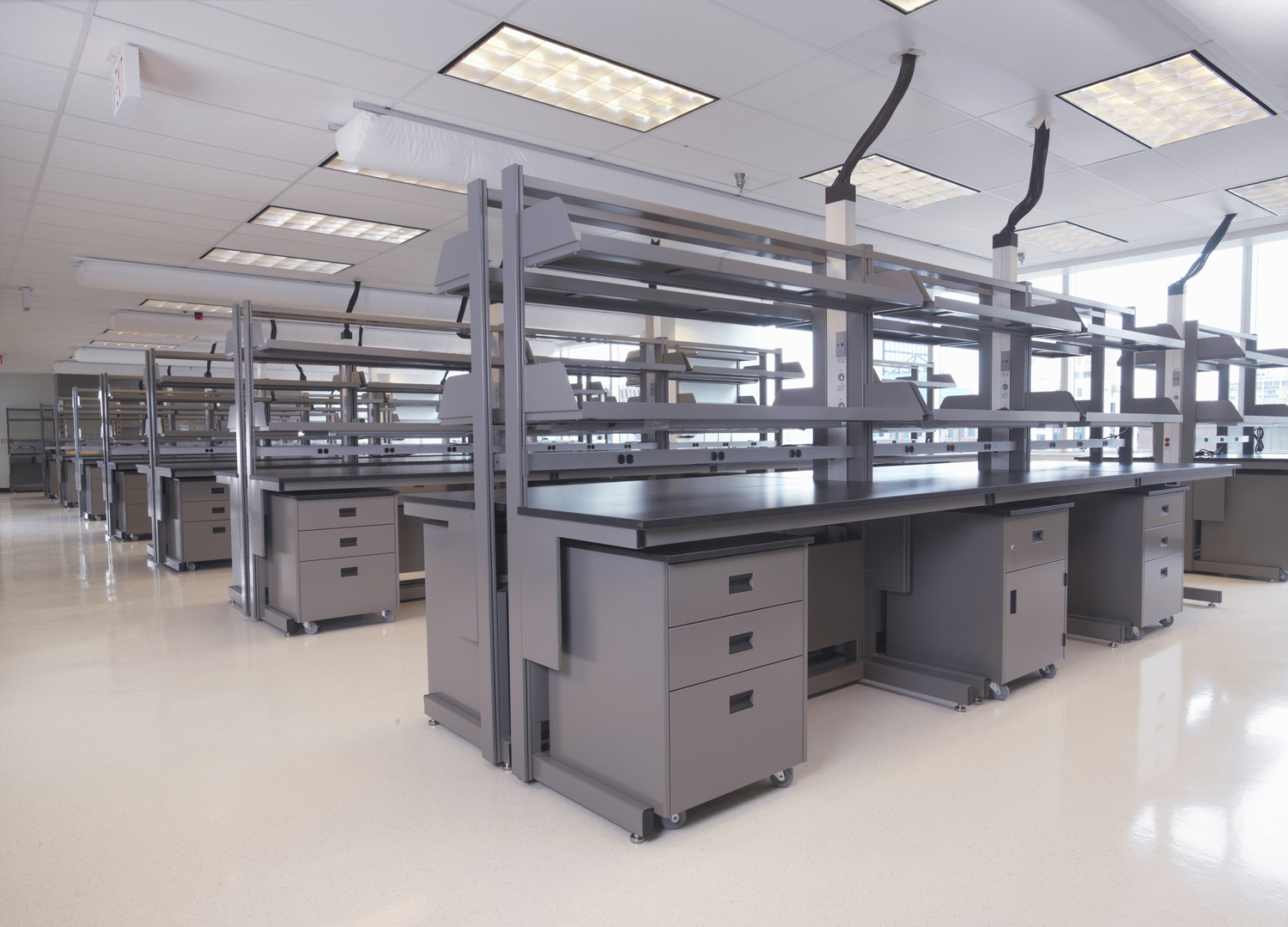
Designing a rapidly evolving research environment with insufficient flexibility can lead to expensive renovations, operational disruptions, and premature replacement of furniture systems. In these situations, investing in adaptable solutions up front may provide substantial long-term benefits and lower lifecycle costs.
This is why there is no single correct answer for every laboratory.
The goal is not to maximize flexibility at all costs. Nor is it to minimize cost by eliminating flexibility. The goal is to find the level of adaptability that best aligns with the laboratory’s intended use and future expectations.
Delivering the Greatest Value
Ultimately, the most successful laboratory projects are rarely those with the most flexibility. They are the projects where the level of flexibility is matched appropriately to the client’s needs.
Some laboratories will benefit from highly adaptable workstations, mobile benches, and modular furniture systems. Others may achieve greater value through more permanent solutions. Most projects will fall somewhere in between. Commonly, there is a mixture of fixed and flexible furniture used across the building and many times within the same lab.
The best laboratory furniture solution is not necessarily the most adaptable one, nor is it always the most fixed. It is the solution that provides the right level of adaptability for the work being performed today while supporting the changes that are likely to occur tomorrow.
When flexibility is matched to actual needs, clients maximize functionality, optimize budgets, and achieve the greatest long-term value from their investment.
Every laboratory has unique requirements, and the appropriate level of adaptability will vary from project to project. To learn more about laboratory furniture solutions contact Mott or your local Mott dealer